 ARTICLE ARCHIVE
.COM one, but not all
A solution may be in sight for firms whose names have been poached by others in the dot com arena, as two new top-level domains get set to change the net naming landscape. Angus Kidman logs on to the latest developments.
October 23, 2001
|

In practice, .com has become virtually synonymous with the general idea of an online presence, and all sorts of non-US and non-commercial operations have registered domain names ending in .com. Telstra, for instance, invested several million dollars in promoting its telstra.com domain to Australian consumers last year, even though it also owns the telstra.com.au domain.
The value attached to the .com domain is such that huge sums have been paid merely to purchase domains ending in the three-letter suffix. In November 1999, eCompanies, which provides support to internet start-ups, paid a staggering $US7.5m ($14.6m) for the rights to the domain business.com. So many .com domain names have been registered that no two or three-letter combinations remain available, leading to complaints no more "good" domains are available.
That situation may be coming to an end. Over the next two months, the dominance of .com will be challenged as two new top-level domains -- the first in more than a decade -- are launched, offering firms and individuals a fresh chance to establish an online branding.
US company Afilias is promoting its .info extension as "where the world goes for information". Those names have been available to the general public since September 12. At the same time, NeuLevel, a joint venture between local domain name registry Melbourne IT and US phone services group NeuStar, is marketing its .biz domain as "the first internet-based environment dedicated exclusively to the business community around the globe". Domains ending in .biz went on general sale this month.
The new domain names were approved for launch earlier this year by the global net name governing body, the Internet Corporation for Assigned Names and Numbers, following a competitive bidding process. They are among a group of seven top-level domains that ICANN wants to see launched to help ease congestion among domain name holders and provide a closer match between domain names and the organisations using them. Others have been developed by smaller special interest groups and many will have limited membership. For instance, .museum will be restricted to bona-fide museums that have joined the Museum Domain Management Association.
One problem both Afilias and NeuLevel are trying to avoid is "cybersquatting", where businesses or individuals trade off well-known brand names by registering an equivalent domain name. Because .com names were available on a first-come, first-served basis, many don't equate to their obvious partners. Probably the most famous example is whitehouse.com, which goes not to the US presidential residence (that's at whitehouse.gov) but to a pornography site. Many other slow-moving companies have been forced to pay large sums to reclaim domain names from cybersquatters who have registered their business names.
Companies that baulk at paying for their own name can also elect to use a dispute resolution process provided by the World Intellectual Property Organisation. Unless that name is protected by a trademark, however, the battle may be difficult to win. Rock star Sting, for instance, lost his battle to claim the sting.com domain from Michael Urvan, who used the nickname "sting" in online gaming.
 In the event of competing trademarks, the situation can be even more problematic. The World Wildlife Fund recently won a court case in London to reclaim the wwf.com domain from the World Wrestling Federation. The latter plans to appeal.
Both Afilias and NeuLevel are hoping to avoid some of those problems by enforcing stricter policies on who is allowed to register names, and providing dispute resolution mechanisms even before the full registration period begins. (The WIPO dispute resolution process was introduced only in 1999.) In doing so, they are following a model championed by Australia's .com.au domain, a site that can be accessed only by registered businesses.
NeuLevel has taken a two-pronged approach. Businesses that want to ensure their trademarks aren't claimed by others were able to file an IP claim form with NeuLevel before August 6, guaranteeing them the rights to the name associated with that trademark in the event of a dispute. If multiple registered businesses from different countries apply for the same domain name -- a scenario that CEO Douglas Armentrout concedes is "quite likely" -- a randomised lottery process will be used to determine who gets that particular .biz name.
Afilias has provided a "sunrise period" before general public registration, during which registrants must provide evidence that they own the trademark. The process for dispute resolution is less complex, in part because .info is being pitched to individuals as well as businesses. "We believe it's a domain that appeals to everyone," says chief marketing officer Roland LaPlante.
But those processes have not been without controversy either. Etail giant Amazon.com has threatened to sue NeuLevel over its assignment process, claiming that it amounts to an illegal lottery under US law. NeuLevel responded by filing a lawsuit against Amazon.com, seeking to establish that the lottery process is not illegal. "We think it's the best way to ensure the process is fair and equitable," says Armentrout.
Just how popular the new domains will prove is not yet clear. Sunrise registrations for .info have been dominated by Europe, which has accounted for 52% of applications. Australia, in contrast, accounts for just 1%. According to LaPlante, "tens of thousands" of registrations took place before the close of the sunrise period on September 27.
More than 2 million applications for the .biz domain were received during the initial claim period, according to Armentrout, with many originating from Asia. However, the initial number of actual registrations is likely to be much lower once disputes are resolved.
Even if all 2 million .biz registrations were unique, the size of the .biz domain would be dwarfed by the existing registry of .com, .net and .org names. That listing comprises more than 30 million individual domains, says registry firm Verisign.
A better measure of the potential success might come from individual country code domains, some of which have already been marketed actively to a global audience as an alternative to .com. For instance, the tiny South Pacific country of Tuvalu was assigned domain names ending in .tv. Under a deal brokered by domain name registry firm .tv Corporation, domains ending in .tv were sold under an auction system, with part of the proceeds going to the Tuvalu government. In its first eight months of operation, 250,000 domain names ending in .tv were registered.
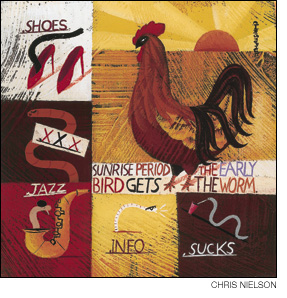
Regardless of their uptake, .info and .biz aren't expected to be the last new domains on offer. Other domains approved by ICANN, including .name for individuals and .pro for professionals, are expected to go live later this year or early next year. A second round of domain approvals may follow. (When ICANN called initially for new top-level domain proposals in 2000, almost 200 suggestions were received, with options ranging from .africa to .zone alongside bizarre suggestions such as .shoes, .sucks and .jazz).
There have been repeated calls for the establishment of a specialised domain such as .xxx or .sex to mark adult content on the internet. In July, two US senators launched a bill aimed at forcing ICANN to establish a .kids domain, which would contain only family-friendly sites.
ICANN had rejected applications for such domains when it was considering potential new options last year on the grounds that there was no way of controlling the content of any .kids domain once it was registered.