 ARTICLE ARCHIVE
Sony's now got ignition, if you're game
Ford's V8 Supercar lines up on the grid in the latest version of top-selling car racing game Gran Turismo, writes Angus Kidman
August 2 2001
|

Why does a mere computer game merit that level of frenzy?
The short answer: money. The Gran Turismo franchise is big business for Japanese electronics giant Sony. The two previous versions of the game are the best-selling titles for its PlayStation console.
In Australia, GT1 sold more than 300,000 copies, while another 180,000 fans bought GT2. In the US, one million GT3 games were shipped to retailers before the July launch.
While numbers like that would make any real world car manufacturer drool, Sony is taking nothing for granted. To ensure local fans are seduced this time around, all versions ofn the latest game include an Australian-developed car for the first time.
"We've planned to localise games for the Australian market for some time," says Steve Wherrett, director of PR and promotions for Sony Computer Entertainment Australia.
"We wanted to give people the opportunity to drive in local cars."
The result? You can now take a Ford Falcon V8 Supercar for a spin on the game's 40-plus tracks.
Sony Australia filmed the vehicle and compiled detailed specs in September last year, then sent them off to the developers in Japan. Already, Wherrett is talking up the possibilities of "a full range of Australian vehicles" in the seemingly inevitable GT4.
If it's a welcome development for Australian Ford followers, there's an obvious question: where's Holden? Isn't there room for a HRT Commodore?
"We approached both groups, and it was Ford who came to the party," Wherrett says.
Holden has an agreement with rival games developer Electronic Arts to include its vehicles in EA's racing games, making extra deals difficult -- although not impossible in the future.
Similar licensing problems also mean that two staples of the racing circuit, Ferrari and Porsche, fail to appear.
All licensing deals with individual car manufacturers are handled by Sony's UK office. While GT3 boasts a greater range of cars than its predecessors, it seems that completely replicating a typical race lineup isn't possible yet.
|
Slam! Crash! Hey, no damage! This is just unreal
The closest most people will get to a Falcon V8 Supercar is a road-going XR8. Even race drivers won't be sampling an automatic version of the Tickford vehicle any time soon, but GT3 gave Motoring the perfect opportunity to take it for a spin.
On the virtual road the car handles smoothly, proving more than equal to the task of outrunning the varied international competition pitted against it.
For straightforward city driving the automatic was more responsive, but in mountainous terrain the extra control offered by the five-speed box was a better choice.
Even at 250km/h the supercar's suspension held up -- no mean feat in a vehicle where comfort is not the primary consideration.
Solidly built, it took some punishing handling without complaint. Indeed, even when we slammed it into a wall at top speed, the bodywork was undamaged.
|
When the original Gran Turismo was released in 1998, it hardly seemed an innovative enough concept to inspire such a dedicated following. Racing titles have been a staple for arcades and home machines alike since 1982, when a simple game called Pole Position proved so popular that queues formed in many arcades for a chance to have a go.
"Racing games are the biggest genre. Australians are very motoring focused, and racings a highly watched sport," says Wherrett.
"As well, racing is one of the easiest styles of gaming. You can jump on and play without having to know too much."
In the two decades since Pole Position, hundreds of racing games have been released and three main categories have emerged. Racing simulators aim at a realistic replica of the driving experience. Titles include Need For Speed and Formula One 2001.
Action racers, such as Grand Theft Auto, downplay driving realism in favour of crime-based scenarios where players can shoot people and run them over.
Finally kart racers, like Mario Kart, throw realism out of the window altogether in favour of physics-defying tracks where cartoon game characters attack each other with weapons made out of bananas while driving cars that appear to have been designed with Noddy in mind. Surprisingly, this approach has proved popular even with people over the age of six.
Gran Turismo fell firmly into the first category of "realistic" simulations, and its success is usually attributed to the fact that it did a better job of recreating the racing experience than other titles.
Besides capturing the real-world physics associated with driving it allowed players to customise the range of vehicles using money you accumulate in an endless series of races.
"It's just one of those games that has captured people's imaginations," Wherrett says. "As a driving simulator, it's always been so accurate."
GT2 followed in 2000, and offered more cars and tracks (including a rally-driving mode) but no real change to the basic driving experience. The same can be said of GT3. "GT3 is not a massive step gameplay-wise over GT2," says PlayStation2 Magazine editor Narayan Pattison, who has just completed a special issue devoted to the game.
"Everything is basically just enhanced and polished up, but GT2 was miles ahead of any other racing game and almost perfect anyway so this is no bad thing."
Despite its success, the game's version of reality actually has clearly defined limits. After all, most people never get the chance to race any sort of car, so who are they to judge?
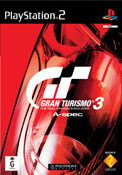 Even someone like the author of this piece -- who is hooked on racing games but can't actually drive -- recognises that slowing down your car by repeatedly letting it scrape against concrete walls probably isn't good for it -- and certainly ought to at least leave a scratch on the paintwork. It doesn't, and you can in fact use it as a braking technique in the game -- although you're less likely to win if you do.
Even the keenest GT fan would be working overtime to try out every car -- there's a choice of more than 150 vehicles if you play the game for long enough.
The new version does take full advantage of the PlayStation2's extra processing power, and has achieved raves for its graphics.
"Don't be surprised if you fool onlookers into thinking you're watching a televised race", comments one US reviewer.
While there are plenty of nice touches --dust obscuring your vision on the rally tracks, dappled forest light across the bonnet of the car -- when you're actually racing, you don't tend to notice them. At a totally addictive 300 virtual kilometres an hour, who has time for that kind of detail?